• Department of Property and Law,
    Norwegian University of Life Sciences (NMBU)

  • IOP Conference Proceedings - Earth and Environmental Science, Volume 1176, 2023.

    Best Paper 1. prize
    CIB W070 International Advisory Board's Awards.
    Recognition shared with Knut Boge. Awards given to one or teams for their outstanding contributions to a specific field of research. These awards recognize excellence in original research, innovative thinking, and the quality of expected impact of published work.

    CIB W070 1/3 Papers Selected to inform ISO work surrounding proptech in an expert panel
    The proceedings to inform ISO/TC 267 WG6 Facility Management. The paper was selected to specifically inform the standardisation of digitalisation in the real estate industry.

  • Property and construction are some of world’s largest industries, but also some of the largest producers of waste and CO2-emissions. The property or real estate industry is currently undergoing a digital transformation. Property technology (proptech) is one of the driving forces for this transformation and enablers to establish a more sustainable society.

    This paper investigates the Norwegian market through 154 proprietary proptech established between 2013 – 2023. The aim is to understand how proprietary proptech are influencing the business practices and how the real estate industry’s overall capacity, efforts, and resources have been allocated in developing novel proptech. Three theoretical frameworks sociotechnical systems (STS), diffusion of innovation, and sustainability transitions, have been used to investigate how proptech influences the real estate industry and FM.

    The results suggest there are innovations coming from at least two unexpected places, namely customised modules moving faster than proprietary proptech, and game changers enabled by feedback loops from late stage and FM big data to early stage property development.

  • Institute of Urbanism and Landscape,
    The Oslo School of Architecture and Design (AHO)

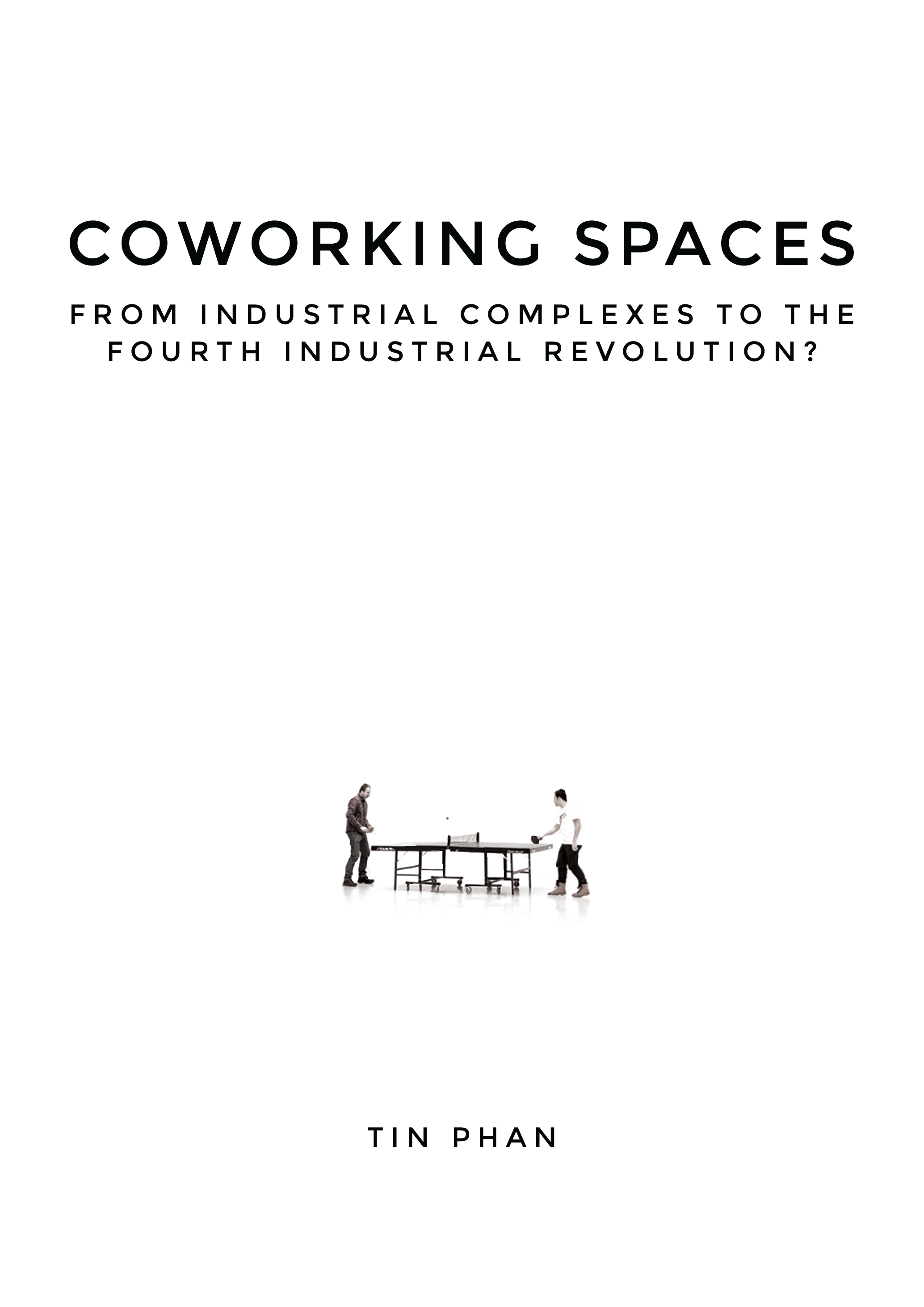
  • According to Oslo Business Region’s estimates, startup-related coworking may take up to as 40% of the employment rates in Oslo in near future, where the percentage is currently on 2. If freelance work are occupying more and more of the working society, so will the definition of what a workspace might be. While this new trend is emerging, another ancient tradition is endangered - namely serendipity, or incidental but favorable events at work; such as small talk over a cup of coffee, knowledge exchange, and room for unforeseen results and ideas at the workplace. If companies and corporations no longer hire competence and expertise in-house, but rather outsource it to freelancers; how will this production of beneficial coincidences at the workplace occur among knowledge workers? It is here coworking spaces emerges as an enduring necessity; in a society where everybody can work apart and every individual is a competitor, participants of coworking are working together, but independently, exploring notions of what a contemporary, yet professional community might be.

    Through 3 case studies, this thesis elaborates on the properties that defines and distinguishes each of them from a set of categories such as: history, management, image and profile, physical layout, urban implications, working culture and social culture. The quality and success of these spaces are not only measured by pure architectonic, urban qualities or economic measures, but also a mixture of intent, virtues, business segment, a critical mass of intellectual property etc.

    Looking past the exotic nature and hype around coworking spaces, resides something more than just a mere trend; they embody the quintessence of the next generation workplaces; a powerhouse of serendipity production in a world getting increasingly more fragmented. Therefore, a workplace here is not just a mere desk and place to work, but an experience in itself. The practice of a careful selection of members is essential in order to cultivate specific communities. We have to ask how the mobilization of knowledge workers through clever subleasing systems are becoming the vanguard of our contemporary working ideals. In the field of urban planning, coworking spaces may in fact evoke some interesting questions in its transcendent values; of how working societies can be replicated in neighborhoods and districts. 

  • Institute of Urbanism and Landscape,
    The Oslo School of Architecture and Design (AHO)

  • Written fall 2014, was the final product in the 5 ECTS elective course, Urban Representations, AHO. This manuscript was originally written under a different title, “The San Francisco Image – everlasting or everchanging?”. As of today, the author has yet to visit San Francisco.

  • San Francisco has long maintained two very different and contradictory city images: the home of the avant-garde cultural elite and the corporate tech innovations. This article investigates different stages of how the image of San Francisco has evolved from counter culture to technophiliac culture in the 40s-80s, the corporate subcultures which ensued and the improbable unity of our contemporary global cyberculture. Further investigation also begs the question in what degree the counter culture was important in shaping the ethos of Silicon Valley.

  • PDF